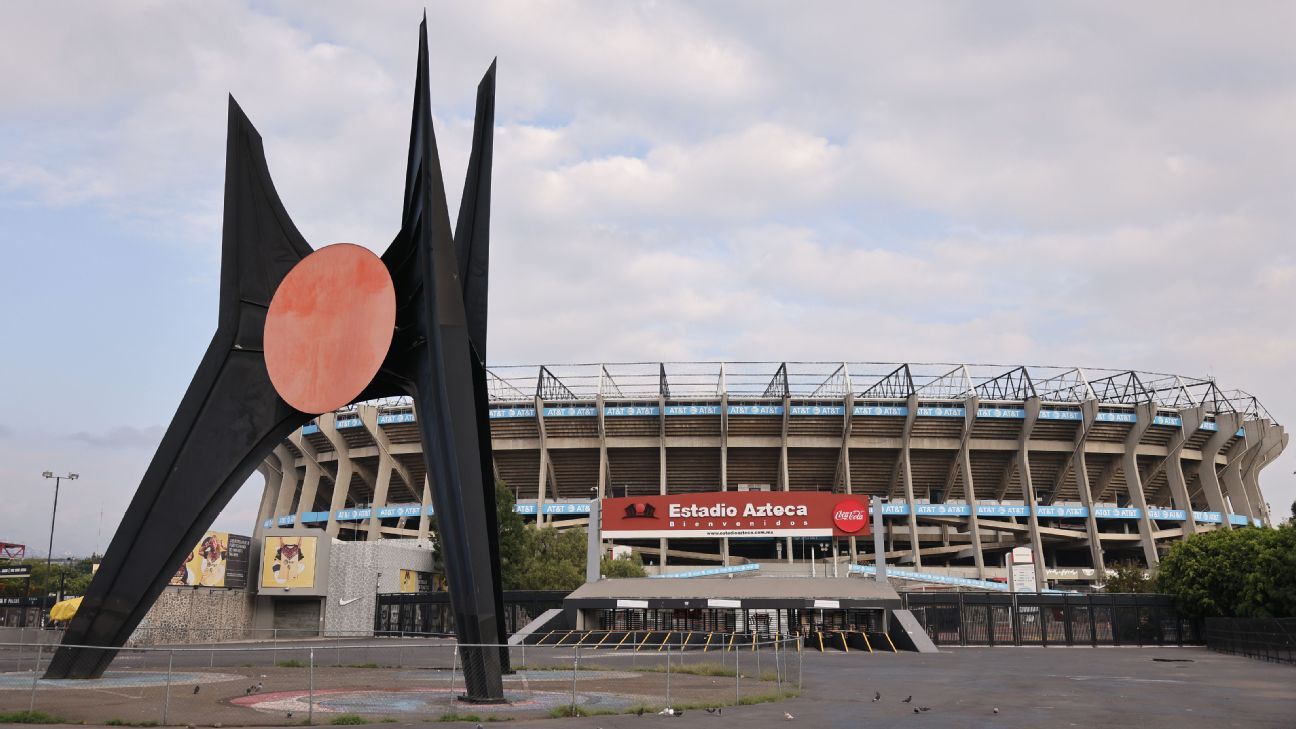
Mundial 2026: Estadio Azteca Gears Up for Unprecedented History
As the football world turns its gaze towards the 2026 FIFA World Cup, anticipation builds not just for the tournament itself, but for the iconic venues that will host the global spectacle. Among the 16 chosen stadiums across North America, one stands out with a grandeur and history unmatched by any other: the Estadio Azteca in Mexico City. Often referred to as "El Coloso de Santa Úrsula," this mythical arena is not merely a stadium; it's a living monument to football's most glorious moments, and its role in the upcoming Mundial 2026 is set to solidify its legendary status even further.
The Estadio Azteca, a name synonymous with football greatness, is poised to make history once again, becoming the first stadium ever to host matches in three separate FIFA World Cups. This remarkable achievement, coupled with the privilege of hosting the tournament's inaugural match, places the Estadio Azteca Mundial experience at the absolute pinnacle of global sports events.
A Living Legend: Estadio Azteca's Unrivaled History
The very mention of Estadio Azteca conjures images of footballing legends and unforgettable triumphs. Inaugurated in 1966, this magnificent structure quickly became hallowed ground. Its design, by architects Pedro Ramírez Vázquez and Rafael Mijares Alcérreca, was revolutionary for its time, creating an amphitheater-like atmosphere where the roar of the crowd becomes an almost palpable force. With a seating capacity of over 87,000, it remains one of the largest stadiums in the world, capable of generating an electrifying ambiance that is truly unique.
What truly sets the Azteca apart is its unparalleled World Cup legacy. It was the centerpiece of the 1970 FIFA World Cup, witnessing Pelé's Brazil team lift the Jules Rimet Trophy in what many consider to be one of the greatest football teams of all time. Sixteen years later, in 1986, the stadium once again hosted the final, where Diego Maradona etched his name into folklore, leading Argentina to victory. To have hosted two World Cup finals, and to have seen two of the sport's most revered figures crown their careers on its pitch, is an achievement no other stadium can claim.
The "Coloso de Santa Úrsula" is more than just a venue; it’s a repository of memories, an echo chamber of cheers, and a symbol of Mexico's deep passion for football. As we look ahead to 2026, the opportunity for the Estadio Azteca: Making History with 3 World Cup Openers further cements its place as an indelible part of football's global narrative.
The Grand Stage: Estadio Azteca's Iconic Role in Mundial 2026
For the 2026 FIFA World Cup, jointly hosted by the United States, Canada, and Mexico, the Estadio Azteca is not just another venue; it's the beating heart of the tournament's beginning. On June 11, 2026, the stadium will host the opening match, marking a truly historic milestone. This event will solidify its place in the annals of football as the first stadium ever to host the inaugural match of three different FIFA World Cups (1970, 1986, and 2026).
This decision is a testament to the stadium's enduring appeal, its proven track record as a world-class host, and the vibrant football culture of Mexico. Hosting the opening game is more than just a ceremonial honor; it's a statement about the global stature of Mexican football and its historical contributions to the sport. Millions will tune in worldwide to witness the kickoff from Mexico City, soaking in the electric atmosphere that only the Azteca can provide. The roar of the crowd, the vibrant colors, and the sheer scale of the event will set the tone for a tournament that promises to be the biggest and most expansive in history.
The opportunity for the Estadio Azteca Mundial to once again capture the world's attention on such a grand scale is a source of immense pride for Mexico. It underscores the stadium's unique ability to transcend generations and remain a central figure in football's biggest moments. Fans from around the globe are already dreaming of experiencing the spectacle firsthand.
Modernization Meets Tradition: Preparing El Coloso for 2026
While the Estadio Azteca is steeped in history, preparation for a modern FIFA World Cup requires meticulous planning and significant upgrades. The challenge lies in balancing the preservation of its beloved "soul" with the necessity of meeting FIFA's stringent infrastructure and operational standards for a 21st-century event. Fans can expect a careful blend of tradition and innovation as The Coloso de Santa Úrsula: Azteca's Iconic Mundial 2026 Role unfolds.
Anticipated renovations will likely focus on enhancing various aspects of the stadium. These could include significant improvements to seating for enhanced comfort, upgrades to accessibility features for all fans, and state-of-the-art media facilities to accommodate the global press corps. Furthermore, improvements to hospitality suites, concession areas, and spectator circulation will undoubtedly be a priority to elevate the fan experience. Safety and security systems will also be modernized to ensure a secure environment for everyone.
However, what's crucial is that these modernizations are expected to be carried out with a deep respect for the stadium's heritage. The aim is not to strip away its character but to enhance its functionality while preserving the iconic elements that make it instantly recognizable. The famous cantilevered roof, the distinct bowl shape, and the vibrant atmosphere that defines the Azteca will undoubtedly remain intact, ensuring that the magic of the venue continues for a new generation of football fans. The goal is to make the Estadio Azteca Mundial experience one that is both historically resonant and thoroughly modern.
Beyond the Pitch: The Fan Experience at Estadio Azteca and Mexico City
Attending a match at the Estadio Azteca is an experience unlike any other, and for Mundial 2026, it will be amplified tenfold. The atmosphere created by Mexican football fans is legendary – a vibrant tapestry of passionate chants, colorful banners, and an unwavering spirit that reverberates through the entire stadium. The sheer volume and energy of the crowd are enough to send shivers down any visitor's spine, creating an unforgettable spectacle.
For international visitors planning to witness the Estadio Azteca Mundial matches, Mexico City offers a rich cultural backdrop. The city itself is a vibrant metropolis, brimming with history, art, and world-renowned cuisine. Visitors can explore ancient Aztec ruins, marvel at colonial architecture, indulge in delicious street food, or wander through bustling markets before or after a match. Practical tips for attending include:
- Transportation: Utilize Mexico City's extensive metro system or ride-sharing services for efficient travel to the stadium, which is located in the southern part of the city.
- Tickets: Be vigilant and purchase tickets only through official FIFA channels to avoid counterfeits.
- Local Culture: Embrace the local culture! Learn a few basic Spanish phrases, try traditional Mexican dishes like tacos al pastor or chiles en nogada, and be open to the warmth and hospitality of the Mexican people.
- Altitude: Mexico City is at a high altitude (over 2,240 meters or 7,350 feet), so visitors might need a day or two to adjust before engaging in strenuous activities. Stay hydrated!
- Early Arrival: Arrive at the stadium well in advance of kickoff to soak in the pre-match festivities and navigate security checks without rush.
The combination of a historic venue, passionate fans, and a culturally rich host city ensures that the Estadio Azteca will provide a truly unique and immersive experience for all attending Mundial 2026.
Conclusion
The Estadio Azteca stands as an enduring symbol of football's rich history and its boundless future. As it prepares to host its third FIFA World Cup and, crucially, the opening match of Mundial 2026, its legacy is set to reach unprecedented heights. From Pelé's brilliance in 1970 to Maradona's magic in 1986, and now to a new era of global football in 2026, the "Coloso de Santa Úrsula" continues to be a sacred stage for the beautiful game.
The blend of historic grandeur, modern enhancements, and the passionate spirit of Mexico City ensures that the Estadio Azteca Mundial experience will be an unforgettable one for players and fans alike. It’s more than just a stadium; it’s a legend reborn, ready to write its next chapter in golden letters.